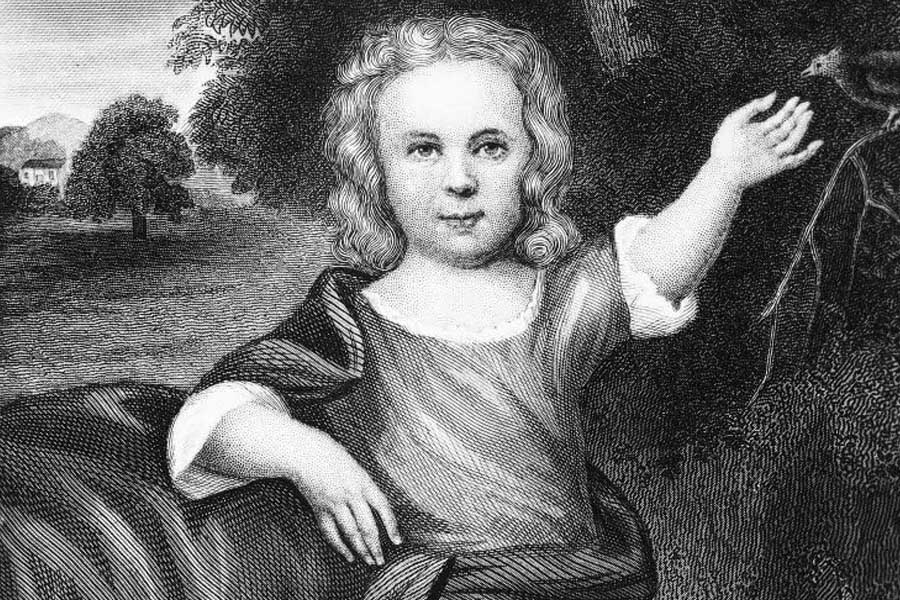
A Child Born Into a House of Motion
A small life with a big shadow describes Francis Folger Franklin. He was born in Philadelphia in October 1732, when the Franklin home was busy with work, trade, ink, paper, and desire. His father, Benjamin Franklin, rose rapidly in colonial America. Deborah Read, his mother, kept the family together better than history remembers. Francis, a son, brought family pride and heritage. His middle name Folger connected him to the Franklin maternal line, which is significant. He was part of a memory web before he could talk.
Francis lived roughly four years. He died of smallpox in Philadelphia on November 21, 1736. The record is complete in one sense. It’s just his story’s beginning. One of Benjamin Franklin’s emotional anchors for disease, risk, and public health was the youngster who hardly had time to acquire habits. History remembers numerous long-term careers. Francis’ short life burned like a match in dry grass.
The Franklin Family Around Him
Francis did not live alone in history. He stood in the middle of a large family network, and that network helps explain why his story still matters. I find it useful to see the family clearly, because each relation adds another thread to the fabric.
| Family member | Relationship to Francis Folger Franklin | Notes |
|---|---|---|
| Benjamin Franklin | Father | Printer, inventor, writer, and public figure |
| Deborah Read Franklin | Mother | Benjamin Franklin’s wife and family partner |
| William Franklin | Half brother | Benjamin Franklin’s older son from before the marriage |
| Sarah Franklin Bache | Full sister | Francis’s younger sister, born after his death |
| Josiah Franklin | Paternal grandfather | Father of Benjamin Franklin |
| Abiah Folger Franklin | Paternal grandmother | Mother of Benjamin Franklin |
| John Read | Maternal grandfather | Father of Deborah Read |
| Sarah White Read | Maternal grandmother | Mother of Deborah Read |
| Jane Franklin Mecom | Paternal aunt | Benjamin Franklin’s sister |
| Mary Franklin Holmes | Paternal aunt | Another of Benjamin Franklin’s sisters |
| Frances Read | Maternal aunt | Deborah Read’s sister |
| Thomas Franklin | Paternal great grandfather | Part of the earlier Franklin line |
| Jane White Franklin | Paternal great grandmother | Part of the earlier Franklin line |
| Peter Folger | Maternal great grandfather | Part of the Folger line |
| Mary Morrell Folger | Maternal great grandmother | Part of the Folger line |
Benjamin Franklin was the father who would later write, argue, and remember. He was not simply a famous man with a famous son. He was a father who carried grief into the next decades of his life. Deborah Read was Francis’s mother, and in the Franklin household she was more than a background figure. She was the steady heart of domestic life, the person who helped hold the family frame together while Benjamin worked and traveled. In a family like theirs, labor was never far from love.
William Franklin, Francis’s half brother, was older and had a very different path. He later became royal governor of New Jersey and remained loyal to the British crown. That political split made the Franklin family story even sharper in later years. William is important here because he shows how one household could contain both kinship and divergence. Francis, by contrast, never had the chance to choose a path of his own.
Sarah Franklin Bache, Francis’s younger full sister, was born after his death. That fact gives his place in the family a quiet ache. He was gone before she arrived, yet she still belonged to the same household line, the same domestic weather. Their father’s memory of Francis likely lived alongside Sarah’s childhood, like a room left closed but never forgotten.
Benjamin Franklin’s parents, Josiah and Abiah, connect Francis to an older foundation. Josiah Franklin was Benjamin’s father, a tallow chandler whose practical trade shaped the Franklin family’s sense of work. Abiah Folger brought in the Nantucket line, including the Folger name that Francis carried. On the Read side, John Read and Sarah White were Deborah’s parents. They represent the maternal household that stood behind Deborah’s life and therefore behind Francis’s early years.
The aunts and great grandparents matter too. Jane Franklin Mecom and Mary Franklin Holmes stood on Benjamin’s side as paternal aunts, while Frances Read was Deborah’s sister and therefore Francis’s maternal aunt. Thomas Franklin and Jane White Franklin, on one side, and Peter Folger and Mary Morrell Folger, on the other, are the deeper roots. They form the underground river beneath the family tree. Francis was only one child, but he sat at the center of a broad inheritance of names, trades, and migrations.
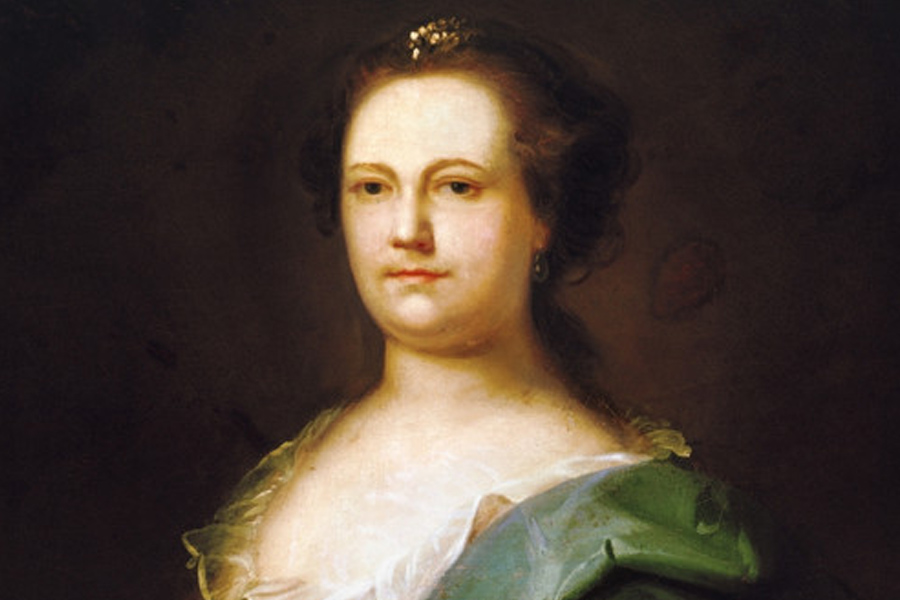
A Very Short Childhood
Francis’s childhood was too short for a profession, business record, or wealth. No career path or employment history were left. His life is different. The story is not about his own work. Others’ creations around his absence.
Disease spread through Philadelphia households like winter wind through a broken door throughout his century. One of the greatest fears was smallpox. Francis died in November 1736 when it reached him. He was buried at Christ Church. In the Franklin story, that peaceful patch of ground where a family’s pain became public history would become a pilgrimage.
The irony hurts. Later, Benjamin Franklin was a leading colonial inoculation advocate. Francis’s death influenced that view. The loss of one kid prompted calls for protection. Thus, Francis’s brief existence resonated beyond his years. Benjamin Franklin became more practical and urgent about prevention. This is a historical force, though not the kind included in bios.
The Memory That Stayed
I see Francis Folger Franklin as a name preserved by affection, not by achievement. His memory survived because Benjamin Franklin did not let it vanish. The father who became a symbol of reason and invention also remained a grieving parent. That combination gives Francis a lasting place in the Franklin story.
The family as a whole is part of why he endures. Benjamin and Deborah formed the center. William and Sarah mark the siblings around him. Josiah, Abiah, John, Sarah, Jane, Mary, Frances, Thomas, Jane White, Peter, and Mary Morrell create the larger web. Francis was not an isolated figure. He was a node in a living system. Remove him, and the pattern changes. Keep him, and the whole family takes on more depth.
FAQ
Who was Francis Folger Franklin?
Francis Folger Franklin was the son of Benjamin Franklin and Deborah Read. He was born in Philadelphia in October 1732 and died of smallpox on November 21, 1736, at about four years old.
Why is Francis Folger Franklin remembered?
He is remembered because his short life had a lasting effect on Benjamin Franklin. Francis’s death helped push his father toward stronger support for inoculation against smallpox.
Did Francis Folger Franklin have siblings?
Yes. His full sister was Sarah Franklin Bache. His older half brother was William Franklin, Benjamin Franklin’s son from before his marriage to Deborah Read.
Who were Francis Folger Franklin’s parents?
His parents were Benjamin Franklin and Deborah Read.
Who were Francis Folger Franklin’s grandparents?
On his father’s side, his grandparents were Josiah Franklin and Abiah Folger. On his mother’s side, they were John Read and Sarah White Read.
Did Francis Folger Franklin have a career or work achievements?
No. He died in early childhood, so he did not have an adult career or recorded work achievements. His historical importance comes from family history and the effect of his death on Benjamin Franklin.
Where is Francis Folger Franklin buried?
He is buried in Christ Church Burial Ground in Philadelphia.
What role did smallpox play in his story?
Smallpox caused his death. That loss became deeply important in the Franklin family and later influenced Benjamin Franklin’s support for inoculation.
Why does his name include Folger?
Folger connects him to his mother’s family line through Abiah Folger and the older Folger family of Nantucket.