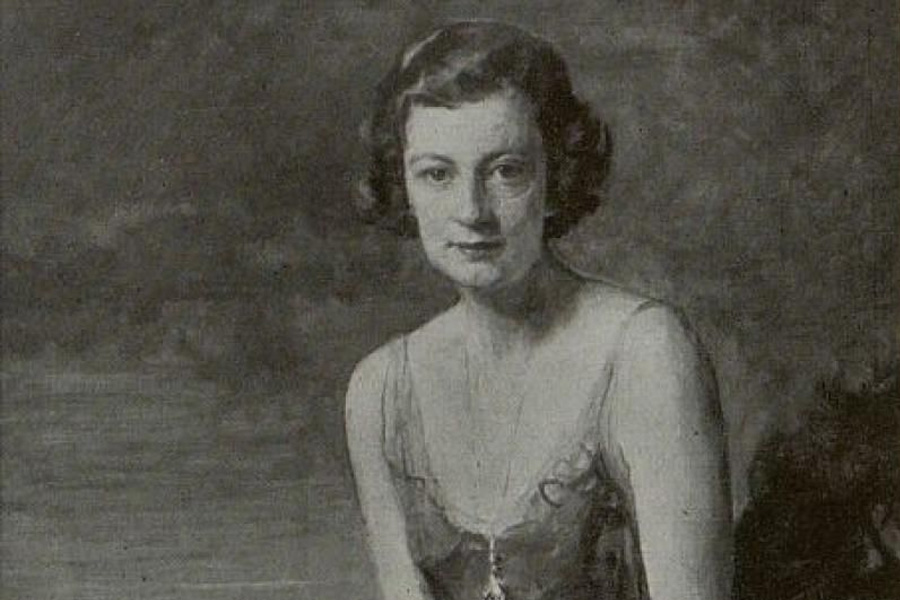
An Heirloom Born Into History
I think of Catherine Francis Lovering Adams as a figure standing at the center of two bright constellations. On one side is the Adams family, long tied to American political life, public duty, and national memory. On the other side is the Lovering and Morgan world, shaped by business, finance, and social prominence. Her life reads like a bridge built over a wide river, joining old republic ideals to the sharp gleam of modern wealth.
Born in 1902, Catherine Francis Lovering Adams entered a family name that already carried weight. Her father, Charles Francis Adams III, was not a quiet man in the historical record. He was a lawyer, businessman, yachtsman, and public servant, and he later became Secretary of the Navy. Her mother, Frances Lovering, belonged to a respected Massachusetts family with its own deep roots. Catherine grew up not in the shadows of history, but in its lamp light. The room around her was already full of portraits, inheritances, expectations, and memory.
The Adams Bloodline and Its Long Shadow
When I trace Catherine’s paternal line, I see a family tree that resembles a tall cathedral window, each pane catching a different ray of the same old light. Her father was Charles Francis Adams III, and through him she was tied to John Quincy Adams and John Adams, two presidents whose names are carved into the nation’s early identity. Her grandfather was John Quincy Adams II, which placed Catherine close to a political dynasty that had not merely watched the country grow, but helped shape its foundations.
Charles Francis Adams III brought a modern face to that old lineage. He was a public man with practical gifts, a figure who moved between law, business, and national service. His role as Secretary of the Navy gave the family a direct link to government and military affairs, while his broader life reflected the polished restraint of elite American society in the early 20th century. Catherine inherited that atmosphere, where duty was assumed, privacy was prized, and reputation was a form of currency.
Charles Francis Adams IV, Catherine’s brother, carried the family name into another era. He became a businessman and the first president of Raytheon. In him, the Adams tradition shifted from diplomacy and public office toward industry and corporate leadership. That transition matters. It shows how Catherine’s family was not frozen in old marble. It adapted, moved, and found new rooms in the house of American power.
The Lovering Family and the Maternal Thread
Catherine received a less visible but equally valuable inheritance from her mother. William Croad Lovering and Mary Loring had Frances Lovering. The great Adams line gains New England flavor from this branch. This family history feels like a polished oak trunk in an old house. It may not yell from the front door, but it houses life-sustaining items.
The Lovering name linked Catherine to ancestry and continuity. William Croad Lovering’s public standing and the Lovering family’s prominence in Massachusetts boosted Catherine’s social status. Frances Lovering gave Catherine a quieter but no less solid pedigree than the Adams political legend. Sometimes the quieter branches matter most. Under the trunk lie the roots.
Marriage Into the Morgan World
In 1923, Catherine married Henry Sturgis Morgan, and that marriage created one of the more striking mergers of American family history. If the Adams line represented public service and national memory, the Morgan line represented financial power, institutional influence, and immense private wealth. Henry Sturgis Morgan was the son of J. P. Morgan Jr., and his life would place him in the center of American banking. He later became one of the co-founders of Morgan Stanley, a name that still echoes through global finance.
Catherine’s marriage was more than a social event. It was a joining of dynasties. The Adams name brought history, politics, and republican prestige. The Morgan name brought capital, business discipline, and elite financial networks. Together they formed a kind of American aristocracy, not in the European sense of titles and crowns, but in the softer, more elusive sense of inherited influence.
I picture their marriage as two river systems meeting. One carried old democratic ideals and presidential memory. The other carried modern banking power and institutional expansion. Where they joined, the current became stronger.
Children and the Shape of the Family
Catherine and Henry had five sons, and each one seems to open a different window into the family’s reach.
Henry Sturgis Morgan Jr. became a rear admiral and maritime lawyer. His life returned the family to naval and service traditions, almost as if one branch of the family tree had leaned back toward the sea.
Charles Francis Morgan followed the financial path more directly and worked as a Morgan Stanley executive. His career reflected the institutional world his father helped build.
Miles Morgan went in a more artistic direction. He became a musician, composer, conductor, and artistic director. In him, the family line seemed to strike a different chord, one less about boardrooms and more about culture and performance.
John Adams Morgan became a banker, sailor, and Olympic gold medalist. His life blended finance, sport, and social prominence. The use of the Adams name in his own identity signals how deeply the old family heritage remained alive.
Peter Angus Morgan completed the set of sons and remained part of the family’s wider story, though his public footprint was more restrained than some of his brothers’.
A family like this is not a straight road. It is a branching path through forests and city streets alike. Catherine’s sons carried pieces of both heritages into the world. Some followed money. Some followed service. Some followed art. That variety gives the family a remarkable breadth.
Public Role and Social Presence
Catherine does not appear in the historical record as a career politician, executive, or author. Her role was more social, ceremonial, and familial. That said, social roles can still carry meaning. In 1935 and again in 1943, she served as sponsor of ships named USS Quincy. That kind of responsibility was not trivial. Ship sponsorship placed her into a ceremonial tradition that linked elite family identity to national symbols and military history.
This kind of role suited her place in society. She was not merely a wife or mother in the narrow sense. She was a public representative of a family network that mattered. In early and mid 20th century America, such a woman could serve as a living emblem of continuity. She stood still while history moved around her, like a lighthouse with generations passing through its beam.
A Family at the Crossroads of Power
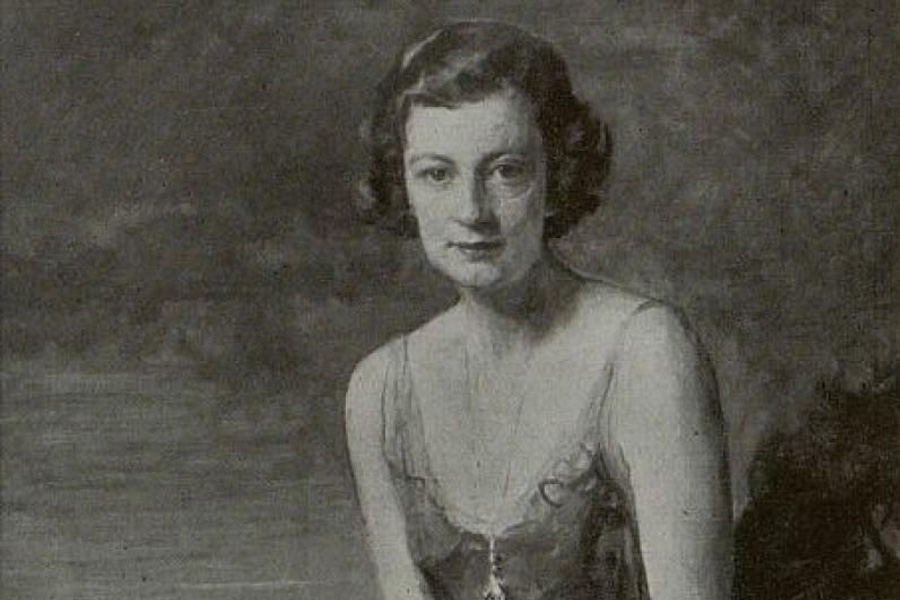
Catherine Francis Lovering Adams’ life and impact systems attract me most. The Adams line provides politics, presidents, service, and history. The Lovering line gives us New England roots and familial continuity. The Morgan line provides capital, finance, and institutional influence. Catherine sits where streams merge.
Her narrative illustrates how marriage, inheritance, and legacy sustained American upper families. They did more than get money or power. Position was gained. They became benchmarks. Names were passed down as keys to rooms. Catherine owned multiple keys from birth and marriage.
Family Members
Charles Francis Adams III
He was Catherine’s father and one of the most visible figures in her immediate family. His career in law, business, yachting, philanthropy, and government made him a classic example of early 20th century American leadership.
Frances Lovering
She was Catherine’s mother and the family link to the Lovering and Loring lines. Through her, Catherine inherited a strong New England family identity.
Charles Francis Adams IV
He was Catherine’s brother. His business career, especially in the defense industry, carried the family name into a new industrial age.
Henry Sturgis Morgan
He was Catherine’s husband and the central Morgan figure in her life. Through him, she entered one of the most powerful financial families in the country.
Henry Sturgis Morgan Jr.
He was one of Catherine’s sons and later a rear admiral and lawyer, reflecting the family’s continued association with service and discipline.
Charles Francis Morgan
He was another son and a Morgan Stanley executive, carrying the family into finance.
Miles Morgan
He was Catherine’s son who made his mark in music and the arts, showing the family’s cultural dimension.
John Adams Morgan
He was a banker, sailor, and Olympic gold medalist, blending finance, athletics, and inherited prestige.
Peter Angus Morgan
He was Catherine’s son and part of the family’s five son legacy, contributing to the larger Morgan family story.
FAQ
Who was Catherine Francis Lovering Adams?
Catherine Francis Lovering Adams was an American woman born in 1902 into the Adams family and later married into the Morgan family. Her life connected political history, social prestige, and financial influence.
Why is her family important?
Her family is important because it links two major American dynasties. The Adams side includes presidents and public servants, while the Morgan side is tied to banking and finance.
Who were her parents?
Her parents were Charles Francis Adams III and Frances Lovering.
How many children did she have?
She had five sons: Henry Sturgis Morgan Jr., Charles Francis Morgan, Miles Morgan, John Adams Morgan, and Peter Angus Morgan.
Did she have a public career?
She does not appear to have had a conventional independent career. Her public life seems centered on family, society, and ceremonial roles, including ship sponsorship.
What makes her life historically notable?
Her significance lies in the way her life connects the Adams presidential line, the Lovering family, and the Morgan banking dynasty. She stands at the intersection of American political memory and financial power.