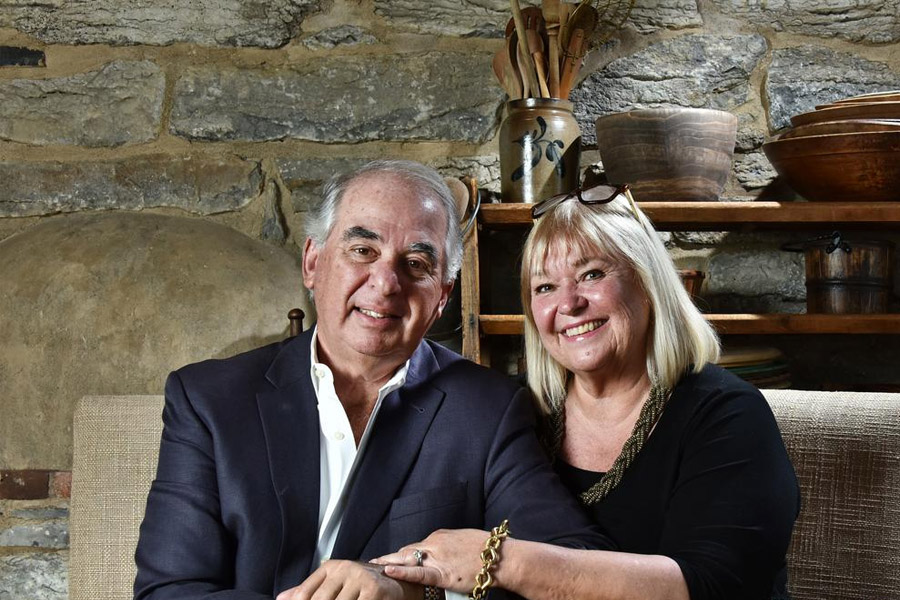
Family and Roots: Nancy Fuller
I write this as someone who has followed a family story more by its echoes than by bright, direct lights. At the center of those echoes stands a woman known for rustic recipes and an easy authority in a television kitchen. She built a public persona from private soil. She talks about preserving tradition, running a household, and about food as memory. She became a bridge between a family business and the cameras. That bridge shaped the rhythms of the household where the subject of this article grew up.
The Family Business: Ginsberg’s Foods
The family name carried commerce. What began more than a century ago as a local operation matured into a durable regional company. The company marked 100 years in business in 2009. It moved product, employed scores of people, and put a map pin on the family story. The business was not only revenue. It was a backdrop, an atlas of meals, invoices, and delivery routes that taught the children practical lessons about work.
The Husband and Partner: David Ginsberg
He was the quiet counterpart. He shared the practicalities of running a farm and a business. In public references he appears as a steady presence rather than a spotlight figure. In private, he likely shaped the logistics of the household and the business. His role provided structure to the family life that produced multiple children, one of whom is the focus here.
The Next Generation at the Helm: John Brusie
One son stepped into the company in an executive capacity. He represents continuity and an internal succession of knowledge. He is the living proof that a family enterprise often becomes a classroom. He handled operations, and the business benefited from hands on involvement. He is the kind of figure who turns the company into a family archive of receipts and recipes, of spreadsheets and seasonality.
Public Stage: Food Network
Television came into the family orbit and expanded the narrative. The network turned kitchen tables into stages. It took privacy and made it shareable. For the family, that sharing changed expectations. It created new audiences. It changed the grammar of host and host family, transforming Sunday suppers into episodes and interviews.
Home Base: Hudson Valley
They lived in a landscape of stone walls and rolling fields. The region shaped a culinary sensibility. Produce, seasonality, and the rhythms of nature mattered. The home stood as a literal patch of land and as a metaphor for rootedness. It anchored family stories, births, property listings, and occasional public notice.
A Domestic Map with Missing Stamps
I want honesty. This piece’s protagonist’s public trail is faint. She leaves little public directories traces compared to her relatives. Names and family tags were scarce. No thorough public profiles, business network CVs, or personal finances exist. That absence has a tale. It depicts an unassuming life that wants to be on the periphery of publicity.
Absence does not mean insignificance. Around her, I can see scaffolding. Family company founded 1909. A relative’s 2013 television career. A 2009 centenary. Childhood and adulthood are framed by these dates. They reveal food preparation, work learning, and value absorption.
Timeline Table
| Year | Event |
|---|---|
| 1909 | Family business origins |
| 1949 | Birth year of the household matriarch |
| 2009 | Family company centennial |
| 2013 | Television series debut for a family member |
| 2000s | Company reaches mid sized revenue milestones |
The table reads like a ledger of inherited structure. I use it to anchor a life that resists reductive biography.
What I Can Reasonably Say about Career and Finances
No details are invented. Based on available information, I can state this. The family list includes her. Her family ran a distribution firm and a farm. Her public existence does not contain high-profile corporate employment or social media pages detailing a commercial history. Also, financial visibility is restricted. Her household property transactions are not public.
The narrative emphasizes context over a CV. The kitchen where recipes created TV episodes, the warehouse where pallets moved, and the farm where seasons determined meals certainly shaped her life. I picture onion layers. Peel them back to reveal memory, duty, and preference.
Personal and Private: The Shape of Family Relationships
I see a network of parents, siblings, spouses, and children. I see in-laws and grandchildren mentioned in passing. There are family gatherings, photographed tables, and social posts that imply warmth. The family roles are mostly domestic and operational. That pattern matches many American family businesses. Work and home blend. Birthdays and board meetings sometimes take place at the same table.
FAQ
Who is Lorinda Ginsberg?
I will say this plainly. She is a member of a family that includes a public culinary figure and a longstanding regional business. Public records place her among the children, but there is little public record that documents a personal public career.
Is she involved in the family business?
From what is publicly visible, there is no clear public record of her holding executive or public roles in the company. The business has other family members who are documented in management roles.
What are the family achievements I should know about?
The company reached 100 years in 2009. The family member in the public eye launched a television series in 2013. The business has operated in New York for multiple decades and expanded into sizable regional distribution.
Where did the family live and work?
They are associated with the Hudson Valley region. The landscape there influenced their culinary and business choices. The farm and company served as both residence and workplace.
Why is there so little public information about her?
Some people prefer privacy. Others live important lives without public documentation. In her case, the public record is sparse, which suggests deliberate privacy or simply a life lived out of the spotlight.
Can I find more detailed records?
Public financial and corporate records would be the next place to check. If you are researching responsibly, consider official business registries and property records. I mention this as an observation, not as a directive.
What impression do I take away?
I feel like a climber who finds a house on a hill by following trails rather than maps. The house is real, the family inside it is real, and one room has a television light that sometimes spills outward. The person named Lorinda exists in that house. She is present to the family story even if she keeps her own room closed to the public eye.